AI SEO Plugin for WordPress: The Ultimate 2026 Guide to Rank #1

Most WordPress websites never reach page one—not because of lack of effort, but because they rely on outdated SEO strategies.

AI SEO plugins are changing that. With intelligent recommendations for content, keywords, and internal linking, these tools give you an unfair advantage over competitors.

From our experience at ZeroRadius, integrating AI SEO with WordPress website development services helped clients double their organic traffic in just three months.

What Is an AI SEO Plugin for WordPress?

An AI SEO plugin acts as a personal SEO assistant:

  • Optimizes content and headings
  • Suggests long-tail keywords
  • Generates meta titles, descriptions, and schema
  • Monitors technical SEO and internal linking

Unlike traditional plugins, AI SEO analyzes search intent, competitor strategy, and real-time ranking signals.

Why 2026 Is the Year of AI SEO

Search engines prioritize:

  • User intent over keywords
  • Content quality over quantity
  • Page experience over backlinks

Businesses combining AI plugins with expert digital marketing and SEO services are outperforming competitors.

Check out more insights in digital marketing trends 2026.

Key Features That Impact Rankings

1. AI Content Optimization

AI improves readability, structure, and keyword usage for both users and search engines. Perfect for regular blogging on your blog.

2. Smart Keyword Clustering

Target multiple related keywords without stuffing content.

3. Automated Meta & Schema

Generate SEO-friendly meta titles, descriptions, and structured data automatically.

4. Internal Linking Suggestions

Connect pages like services and about us for better rankings and engagement.

5. Technical SEO Monitoring

Detect broken links, slow-loading pages, and missing meta info. Improve speed with page speed optimization services.

How to Use an AI SEO Plugin in WordPress (Step-by-Step)

  1. Install the plugin (Rank Math AI recommended).
  2. Set up SEO basics: site title, meta descriptions, sitemap.
  3. Optimize content using AI suggestions: headings, keywords, paragraphs.
  4. Add internal links to key pages like UI/UX services or website maintenance.
  5. Monitor performance and update content regularly.

Real-World Use Cases

Bloggers: Rank for multiple keywords without extra effort.

Local businesses: Improve visibility for location-based searches. Learn how to choose a reliable web design agency.

eCommerce stores: Boost product page rankings with WooCommerce, Shopify, or BigCommerce. Check AI Shopify trends 2026.

Case Study: Doubling Organic Traffic in 3 Months

Client: Mid-sized electronics store

Problem: Low traffic, poor search visibility, slow updates

Solution:

  • Installed Rank Math AI
  • Optimized product pages and blog posts
  • Added AI-recommended internal links

Result:

  • Organic traffic increased 120%
  • Product pages reached page one on Google
  • Bounce rate dropped by 18%

Tip: AI can suggest keywords and structure, but adding your own brand voice and insights makes content stand out.

Common Mistakes to Avoid

Over-relying on automation
Ignoring content quality
Skipping internal links
Neglecting website speed

Fix these using: common website mistakes guide.

Conclusion

AI SEO is not the future—it’s the present. But tools alone don’t rank websites. Strategy, content, and technical execution do. Combine them with AI, and you’re on track for higher rankings, more traffic, and real results.

Ready to Rank #1?

AI SEO plugins are powerful tools. They assist with content optimization and can boost rankings effectively.

👉 Explore our SEO services

👉 Build your site with WordPress experts

👉 Or contact us today

Bonus Resources

🤔 Frequently Asked Questions (FAQs)

A tool that automates content optimization, keywords, and technical SEO.

Rank Math AI, Yoast SEO AI, or AIOSEO.

Yes, if combined with strategy and quality content.

No, AI enhances human strategy—it doesn’t replace it.

Use AI tools, optimize content, and get expert SEO services.

A tool that automates content optimization, keywords, and technical SEO.

Rank Math AI, Yoast SEO AI, or AIOSEO.Yes, if combined with strategy and quality content.No, AI enhances human strategy—it doesn’t replace it.

Use AI tools, optimize content, and get expert SEO services.

How AI Boosts Conversion Rates in E-Commerce Stores in 2026

In 2026, AI boosts conversion rates in e-commerce stores by transforming how businesses convert visitors into customers. Instead of focusing only on traffic, brands now use AI to improve personalization, automate marketing, and increase sales. Businesses are now focusing heavily on how to turn visitors into buyers, and that’s exactly where AI boosts conversion rates in e-commerce stores.
Artificial Intelligence is no longer optional. In fact, it’s the backbone of modern online shopping experiences. From smart product recommendations to predictive analytics, AI is helping brands increase engagement, reduce friction, and drive more sales.
If you’re planning to scale, working with eCommerce experts ensures your store is built for conversions from day one.
According to recent research, AI-driven personalization can significantly improve conversions (source).

How AI Boosts Conversion Rates in E-Commerce Stores

When we say AI boosts conversion rates in e-commerce stores, we’re referring to the use of intelligent systems that analyze user behavior and optimize every step of the customer journey.
This includes:

  • Personalized product suggestions
  • Smart search results
    Automated marketing campaigns
  • AI-driven UX improvements

Businesses investing in AI-powered eCommerce store development are seeing measurable improvements in conversion rates.

Why Voice AI Is Becoming Essential in E-Commerce

With the rapid growth of voice-enabled devices and mobile usage, voice interactions are becoming a preferred way for users to engage online.
Voice AI offers:

  • Faster communication
  • Hands-free convenience
  • Better accessibility
  • More natural interactions

To deliver these experiences effectively, businesses must also focus on performance using page speed optimization services and strategic growth through digital marketing and SEO services.
Businesses that adopt this technology early gain a significant competitive advantage.

1. AI-Powered Personalization

One of the biggest reasons AI boosts conversion rates in e-commerce stores is personalization.
AI tracks:

  • Browsing behavior
  • Purchase history
  • Customer preferences

This allows stores to display highly relevant products. As a result, it increases the chances of purchase.
For advanced personalization strategies, explore AI-optimized eCommerce strategies.
👉 SEO Boost Tip: Repeating the keyword naturally—like “AI boosts conversion rates in e-commerce stores through personalization”—helps ranking without keyword stuffing.

2. AI Chatbots That Increase Sales Instantly

Another powerful way AI boosts conversion rates in e-commerce stores is through intelligent chatbots.
These bots:

  • Answer queries instantly
  • Recommend products
  • Reduce cart abandonment

Learn how to implement one here:
Build an AI chatbot for eCommerce
Voice assistants are also growing rapidly. Read about voice AI in eCommerce.

3. Smart Product Recommendations That Convert

AI recommendation engines are a major reason why AI boosts conversion rates in e-commerce stores in 2026.
They:

  • Suggest complementary products
  • Upsell premium options
  • Personalize homepage content

Choosing the right platform is critical. Compare here:
Best eCommerce platform comparison

4. Predictive Analytics = Higher ROI

Predictive analytics is another major factor explaining how AI boosts conversion rates in e-commerce stores.
AI helps you:

  • Predict customer intent
  • Optimize pricing strategies
  • Improve inventory management

Businesses leveraging AI-driven digital marketing services gain a strong competitive edge.

5. Page Speed Optimization with AI

Speed directly impacts conversions. A slow website kills sales.
That’s why AI boosts conversion rates in e-commerce stores by optimizing:

  • Image loading
  • Scripts
  • Server response time

Improve performance using page speed optimization services.

6. AI-Driven UX/UI Improvements

User experience is critical. AI analyzes user behavior and improves layouts accordingly.
This is another way AI boosts conversion rates in e-commerce stores, by making navigation smoother and faster.
Enhance your design with UI/UX optimization services.

7. AI Marketing Automation (High Conversion Driver)

Marketing automation is where AI boosts conversion rates in e-commerce stores at scale.
AI helps:

  • Send personalized emails
  • Optimize ad campaigns
  • Segment audiences

Stay ahead with digital marketing trends 2026.

8. Platform-Specific AI Advantages

Different platforms offer different AI capabilities.
Shopify AI development – Easy automation
WooCommerce AI solutions – Flexible customization
BigCommerce AI tools – Enterprise scalability
Explore more:
Top eCommerce platforms 2026

9. AI + Branding = Trust = Conversions

Strong branding improves trust, which directly impacts conversions.
AI tools help create consistent brand experiences, proving again how AI boosts conversion rates in e-commerce stores.
Build your identity with branding and logo design services

10. Common Mistakes That Reduce AI Effectiveness

Even though AI boosts conversion rates in e-commerce stores, poor implementation can hurt performance.
Avoid:

  • Over-automation
  • Poor UX design
  • Slow websites

Fix issues here: Common website mistakes

11. Future Trends: AI in E-Commerce Beyond 2026

The future will see even more advanced applications:

  • AI-generated product pages
  • Voice commerce
  • Visual search
  • Predictive UX

Stay updated with AI Shopify trends and  AI in eCommerce future insights.

12. Why Businesses Must Act Now

The truth is simple:
AI boosts conversion rates in e-commerce stores, but only for businesses that implement it correctly.

Delaying adoption means losing customers to competitors who already use AI.

Get started with Complete digital services or connect via contact page.

Conclusion

AI is no longer a futuristic concept—it’s a necessity. From personalization to automation, every aspect of e-commerce is being transformed.AI boosts conversion rates in e-commerce stores by improving personalization and user experience.
In addition, AI boosts conversion rates in e-commerce stores through automation and predictive analytics.
If you want to grow your business in 2026 and beyond, remember this:
👉 AI boosts conversion rates in e-commerce stores by creating smarter, faster, and more personalized shopping experiences.

🤔 Frequently Asked Questions (FAQs)

AI boosts conversion rates in e-commerce stores by analyzing customer behavior, personalizing product recommendations, and automating interactions. It helps deliver the right product to the right customer at the right time, which significantly increases the chances of a purchase.

AI is essential in 2026 because customer expectations are higher than ever. AI boosts conversion rates in e-commerce stores by enabling personalization, predictive analytics, and automated marketing, helping businesses stay competitive in a crowded market.

Yes, AI boosts conversion rates in e-commerce stores by reducing cart abandonment through real-time assistance, personalized offers, and automated reminders. AI chatbots and email automation play a key role in recovering lost sales.

Personalization ensures customers see products relevant to their interests. This is one of the main reasons AI boosts conversion rates in e-commerce stores, as it enhances user experience and increases purchase intent.

AI is becoming more affordable and accessible. Many tools offer scalable pricing, making it easier for small businesses to benefit from how AI boosts conversion rates in e-commerce stores without a huge investment.

AI boosts conversion rates in e-commerce stores by analyzing customer behavior, personalizing product recommendations, and automating interactions. It helps deliver the right product to the right customer at the right time, which significantly increases the chances of a purchase.

AI is essential in 2026 because customer expectations are higher than ever. AI boosts conversion rates in e-commerce stores by enabling personalization, predictive analytics, and automated marketing, helping businesses stay competitive in a crowded market.Yes, AI boosts conversion rates in e-commerce stores by reducing cart abandonment through real-time assistance, personalized offers, and automated reminders. AI chatbots and email automation play a key role in recovering lost sales.Personalization ensures customers see products relevant to their interests. This is one of the main reasons AI boosts conversion rates in e-commerce stores, as it enhances user experience and increases purchase intent.AI is becoming more affordable and accessible. Many tools offer scalable pricing, making it easier for small businesses to benefit from how AI boosts conversion rates in e-commerce stores without a huge investment.

How Voice AI Is Revolutionizing E-Commerce Customer Service in 2026

Customer expectations in e-commerce have changed dramatically over the past few years. Today’s shoppers expect instant responses, personalized recommendations, and seamless interactions across every touchpoint.
Traditional customer support systems often struggle to keep up with these demands. This is where Voice AI is making a real difference.
By enabling natural, real-time conversations between customers and online stores, Voice AI is transforming how businesses deliver support, improve engagement, and increase conversions. Businesses investing in eCommerce development services are already leveraging these advancements to stay competitive.

What Is Voice AI in E-Commerce?

Voice AI is a technology that allows systems to understand and respond to human speech using artificial intelligence. It combines speech recognition, natural language processing (NLP), and machine learning to create conversational experiences.
In e-commerce, Voice AI enables customers to:

  • Search for products using voice
  • Get instant support
  • Place and manage orders
  • Receive personalized recommendations

It essentially acts as a virtual assistant that enhances the entire shopping journey.
Voice AI works seamlessly with modern platforms supported by Shopify website development services and scalable WooCommerce website development solutions.

Why Voice AI Is Becoming Essential in E-Commerce

With the rapid growth of voice-enabled devices and mobile usage, voice interactions are becoming a preferred way for users to engage online.
Voice AI offers:

  • Faster communication
  • Hands-free convenience
  • Better accessibility
  • More natural interactions

To deliver these experiences effectively, businesses must also focus on performance using page speed optimization services and strategic growth through digital marketing and SEO services.
Businesses that adopt this technology early gain a significant competitive advantage.

Key Ways Voice AI Is Transforming Customer Service

1. 24/7 Instant Customer Support

Voice AI eliminates waiting time by providing immediate responses to customer queries at any hour.
Unlike traditional support systems, it ensures:

  • No call queues
  • No delayed responses
  • Consistent support quality

This level of availability significantly improves customer satisfaction.

2. Personalized Shopping Experiences

One of the biggest advantages of Voice AI is its ability to deliver highly personalized experiences.
By analyzing user behavior and preferences, it can:

  • Recommend relevant products
  • Suggest repeat purchases
  • Offer tailored deals

A seamless experience supported by web design and UI/UX services further enhances personalization and usability.
This personalization leads to higher engagement and better conversion rates.

3. Faster and Frictionless Ordering

Voice AI simplifies the buying process by allowing customers to complete actions using simple voice commands.
Customers can:

  • Place orders quickly
  • Track deliveries instantly
  • Modify purchases without hassle

This reduces friction and makes the shopping experience smoother, especially when built on scalable platforms as discussed in the WordPress vs Shopify vs custom platform comparison.

4. Multilingual Customer Support

For businesses targeting global markets, language can be a barrier.
Voice AI solves this by supporting multiple languages and accents, enabling brands to:

  • Reach a wider audience
  • Improve accessibility
  • Deliver localized experiences

5. Reduced Operational Costs

Automating customer service through Voice AI reduces the need for large support teams.
This helps businesses:

  • Lower operational expenses
  • Improve efficiency
  • Scale support without increasing costs

Businesses upgrading their systems can benefit from website migration and maintenance services to ensure smooth integration.

6. Improved Customer Satisfaction and Loyalty

Fast, accurate, and personalized responses lead to better customer experiences.
When customers feel understood and supported, they are more likely to:

  • Return for future purchases
  • Recommend the brand
  • Build long-term loyalty

A strong brand identity supported by logo and branding services also plays a key role in building trust.

Voice AI and Its Impact on SEO

Voice AI is not just transforming customer service—it also plays a role in improving search engine performance.
Voice-driven interactions help:

  • Increase time spent on the website
  • Reduce bounce rates
  • Improve user engagement

When combined with digital marketing and SEO services, Voice AI can significantly improve search visibility.
Additionally, optimizing for voice search helps businesses appear in conversational queries and featured snippets.

Voice Commerce vs Traditional E-Commerce

Voice AI introduces a completely new way of interacting with online stores.

Feature Traditional E-Commerce Voice AI E-Commerce
Interaction Text-based Voice-based
Speed Moderate Instant
Experience Static Conversational
Support Manual Automated

This shift is redefining user expectations and setting new standards for digital experiences.

Real-World Applications of Voice AI

Voice AI is already being used in various ways across e-commerce platforms:

  • Voice-based product search
  • AI-powered customer support
  • Smart order tracking
  • Voice-enabled checkout

Many businesses are already implementing AI-optimized eCommerce strategies to stay ahead in the competitive landscape.

Challenges of Implementing Voice AI

Despite its advantages, implementing Voice AI comes with certain challenges:

  • Integration with existing systems
  • Data privacy concerns
  • Handling complex queries
  • Accuracy across different accents

Many of these issues are highlighted in common website mistakes businesses make, which businesses should actively avoid.

How to Successfully Implement Voice AI

To get the best results from Voice AI, businesses should follow a structured approach:
Choose a scalable e-commerce platform

A well-planned implementation ensures long-term success and scalability.

The Future of Voice AI in E-Commerce

Voice AI is expected to evolve rapidly in the coming years.
Future advancements may include:

  • Emotion-aware interactions
  • Predictive recommendations
  • Deeper personalization
  • Integration with smart devices

To stay competitive, businesses should follow digital marketing trends in 2026 and align with insights from website development trends in 2026.
Forward-thinking companies are also guided by the 5 tech pillars every business needs in 2026.

Conclusion

Voice AI is transforming e-commerce customer service by making it faster, smarter, and more personalized.
Businesses that embrace this technology can deliver superior customer experiences, improve efficiency, and stay ahead of the competition.

If you’re planning to implement Voice AI, starting with expert eCommerce development services or choosing to contact our team can help you move in the right direction.

In 2026 and beyond, Voice AI is not just an innovation—it is becoming a standard for modern e-commerce success.

🤔 Frequently Asked Questions (FAQs)

Voice AI allows customers to interact with online stores using voice commands for searching products, placing orders, and getting support.

It provides instant responses, personalized recommendations, and seamless interactions, making the shopping process faster and easier.

Yes, Voice AI helps small businesses automate support and compete with larger brands efficiently.

Yes, it improves engagement metrics and supports voice search optimization, which can boost search rankings.

The future includes smarter, more human-like interactions, deeper personalization, and integration with emerging technologies.

Voice AI allows customers to interact with online stores using voice commands for searching products, placing orders, and getting support.

It provides instant responses, personalized recommendations, and seamless interactions, making the shopping process faster and easier.

Yes, Voice AI helps small businesses automate support and compete with larger brands efficiently.

Yes, it improves engagement metrics and supports voice search optimization, which can boost search rankings.

The future includes smarter, more human-like interactions, deeper personalization, and integration with emerging technologies.

Best Ecommerce Platforms Used by Ecommerce Development Companies in 2026

The global ecommerce industry continues to grow rapidly, with businesses investing heavily in digital storefronts that provide seamless online shopping experiences.

Choosing the right ecommerce platform is one of the most important decisions when building an online store. The platform you select determines your website’s scalability, performance, customization options, and ability to integrate with modern digital tools.

Most professional ecommerce development companies rely on proven platforms that offer flexibility, security, and strong ecosystem support.

In this guide, we explore the best ecommerce platforms used by ecommerce development companies in 2026 and help you understand which platform is best for your business.

Why Choosing the Right Ecommerce Platform Matters

An ecommerce platform is the technology foundation of your online store. The right platform affects several key factors that determine long-term business success.

Scalability

Your ecommerce store must handle traffic growth, product catalogs, and increased orders without performance issues. Businesses planning long-term growth often work with experts providing ecommerce store development services to ensure their platform can scale efficiently.

SEO Performance

Technical SEO factors such as page speed, structured data, and URL structure depend heavily on the platform. Many online businesses also invest in professional digital marketing and SEO services to improve their organic visibility and attract qualified traffic.

Customization

Businesses often need custom features such as advanced checkout flows, subscription systems, and integrations with CRM or ERP systems. Designing intuitive shopping experiences also requires strong UI/UX design for ecommerce websites to improve conversions and customer satisfaction.

Security

Secure payment processing and customer data protection are essential for building trust and complying with global regulations.

Website Performance

Fast loading pages significantly impact ecommerce conversions and search rankings. Many businesses invest in website page speed optimization services to ensure their stores perform well across all devices.
For these reasons, most ecommerce development companies carefully evaluate platforms before starting any project.

1. Shopify – The Most Popular Ecommerce Platform

Shopify is one of the most widely used ecommerce platforms in the world. It allows businesses to launch online stores quickly without managing servers or infrastructure.

Many ecommerce agencies recommend Shopify for startups and growing brands because of its simplicity and scalability. Businesses planning to build scalable Shopify stores often work with professionals offering Shopify website development services to customize themes, integrate apps, and optimize store performance.

Key Features
• Fully hosted platform
• Large app marketplace
• Built-in payment gateways
• Mobile-optimized themes
• Multi-channel selling support

Best For:

Startups launching their first online store
Direct-to-consumer brands
Dropshipping businesses
Fast-growing ecommerce companies

Shopify enables businesses to launch production-ready ecommerce stores in a matter of weeks.
Businesses interested in the future of AI-powered commerce can also explore emerging AI Shopify trends shaping ecommerce.

2. WooCommerce – Best Ecommerce Platform for SEO

WooCommerce is an open-source ecommerce plugin built for WordPress. It transforms a WordPress website into a fully functional online store.

Because it runs on WordPress, WooCommerce provides powerful content marketing and SEO capabilities. Companies already using WordPress often collaborate with experts specializing in WooCommerce website developmentto create fully customizable ecommerce experiences.

Key Features
• Open-source flexibility
• Thousands of plugins
• Advanced SEO control
• Full ownership of data
• Highly customizable

Best For:

  • Content-driven ecommerce websites
  • SEO-focused online businesses
  • Companies already using WordPress

WooCommerce is often considered one of the most SEO-friendly ecommerce platforms available.
For businesses comparing platforms, our guide on WordPress vs Shopify vs custom development explains which option is best depending on your business needs.

3. Magento (Adobe Commerce) – Enterprise Ecommerce Solution

Magento, now known as Adobe Commerce, is a powerful ecommerce platform designed for large businesses and enterprise-level operations.
It offers extensive customization options and advanced features for managing complex ecommerce environments.

Key Features
• Enterprise-grade scalability
• Advanced product catalog management
• Multi-store support
• B2B ecommerce capabilities
• Extensive customization

Best For:

  • Large ecommerce companies
  • Global retailers
  • B2B ecommerce businesses
  • Businesses with complex product catalogs

Magento requires experienced developers but offers unmatched flexibility for enterprise ecommerce.

4. Wix eCommerce – Beginner Friendly Platform

Wix has evolved into a powerful website builder with integrated ecommerce capabilities.
It focuses on ease of use and allows entrepreneurs to launch stores without technical expertise.

Key Features
• Drag-and-drop website builder
• AI website creation tools
• Built-in marketing features
• Affordable pricing plans

Best For:

  • Small businesses
  • Entrepreneurs launching their first store
  • Simple ecommerce websites

5. BigCommerce – Scalable SaaS Ecommerce Platform

BigCommerce is a powerful SaaS ecommerce platform that combines ease of use with developer flexibility.
It allows businesses to build scalable online stores while still benefiting from managed infrastructure. Many companies rely on BigCommerce website development services to build enterprise-grade ecommerce platforms.

Key Features
• Built-in SEO tools
• Multi-channel selling integrations
• Headless commerce capabilities
• No platform transaction fees

Best For:

  • Mid-size ecommerce businesses
  • Brands planning rapid growth
  • Companies needing scalable SaaS infrastructure

BigCommerce is increasingly popular among ecommerce development companies for its flexibility.

6. Squarespace – Best for Design-Focused Brands

Squarespace is known for its premium design templates and visual website builder.
It is widely used by creative professionals and lifestyle brands that prioritize aesthetics and storytelling.

Key Features
• Beautiful design templates
• Built-in ecommerce tools
• Integrated content management
• Easy-to-use interface

Best For:

  • Fashion brands
  • Artists and creators
  • Lifestyle product companies
    Squarespace is ideal for businesses that prioritize visual storytelling.

How Ecommerce Development Companies Choose Platforms

Professional ecommerce developers typically evaluate several factors before selecting a platform.
Business Model
Different platforms support B2C, B2B, and marketplace models.
Growth Potential
The platform must support long-term business expansion.
Customization Requirements
Some projects require advanced customization and integrations.
Budget
Costs include development, hosting, plugins, and maintenance.
SEO and Marketing
Platforms with strong SEO and marketing capabilities provide long-term advantages. Businesses that want to maximize traffic often combine ecommerce development with SEO and digital marketing strategies.

Final Thoughts

Choosing the right ecommerce platform is crucial for building a successful online store.

The most widely used ecommerce platforms today include Shopify, WooCommerce, Magento, BigCommerce, Wix, and Squarespace. Each platform serves different types of businesses depending on their scalability needs, customization requirements, and budget.

Working with an experienced ecommerce development company can help you select the right technology stack and build a scalable online store that supports long-term growth.

Need Help Building an Ecommerce Website?

Choosing the right ecommerce platform can significantly impact your online business success.

If you’re planning to launch or scale an online store, working with an experienced ecommerce development company can help you build a high-performance ecommerce website tailored to your business needs.

Contact our team today to discuss your ecommerce project and discover the best platform for your business.

🤔 Frequently Asked Questions (FAQs)

Shopify is currently one of the most popular ecommerce platforms due to its simplicity, scalability, and extensive ecosystem of apps and integrations.

WooCommerce is widely regarded as one of the most SEO-friendly ecommerce platforms because it runs on WordPress and provides full control over technical SEO settings.

Large enterprises typically use Magento (Adobe Commerce) or BigCommerce because they support advanced customization and large product catalogs.

Shopify is easier to use and faster to launch, while WooCommerce offers more customization and SEO control. The best option depends on your business needs.
Shopify is currently one of the most popular ecommerce platforms due to its simplicity, scalability, and extensive ecosystem of apps and integrations.

WooCommerce is widely regarded as one of the most SEO-friendly ecommerce platforms because it runs on WordPress and provides full control over technical SEO settings.
Large enterprises typically use Magento (Adobe Commerce) or BigCommerce because they support advanced customization and large product catalogs.
Shopify is easier to use and faster to launch, while WooCommerce offers more customization and SEO control. The best option depends on your business needs.
How to Choose a Reliable Web Design Agency Near Me

Introduction

Choosing the right web design agency is one of the most important decisions for any business building an online presence. A well-designed website improves user experience, increases conversions, and strengthens your brand identity. However, with so many agencies offering similar services, it can be difficult to know which one is reliable.

This guide explains how to evaluate a web design agency, what factors to consider, and how to choose the best partner for your business.

1. Review the Agency’s Portfolio

A strong portfolio shows the agency’s design skills, creativity, and technical expertise.

When reviewing a portfolio, look for:

  • Modern and responsive designs
  • Fast-loading websites
  • Good user experience
  • Projects from different industries

A diverse portfolio demonstrates the agency’s ability to handle different business needs. However, portfolios should be used as a conversation starter rather than the only proof of capability, since visuals alone may not reveal how complex the development process was.

Tip from Zeroradius:

Always review at least 5–10 websites created by the agency. This helps you understand their design style and quality.

2. Check Client Reviews and Testimonials

Client reviews help you understand the agency’s reliability and work quality.

Look for reviews on:

  • Google Reviews
  • Clutch
  • Trustpilot
  • LinkedIn

Pay attention to patterns in feedback, especially comments about communication, project delivery, and customer support. Reviews provide insight into how well the agency actually performs beyond marketing claims.

Tip from Zeroradius:

Ask the agency whether they build SEO-friendly websites from day one.

3. Evaluate Their Experience and Expertise

Not all web design agencies specialize in the same services.

Some focus on:

Choose an agency with experience in projects similar to yours. Experienced agencies are better equipped to handle technical challenges and deliver high-quality results.

Tip from Zeroradius:

Choose agencies that focus on scalable platforms so your website can grow with your business.

4. Understand Their Design and Development Process

A professional web design agency should have a clear process for building websites.

Typical steps include:

  • Discovery and research
  • Wireframing and design
  • Website development
  • Testing and quality assurance
  • Launch and optimization

A structured workflow ensures the project runs smoothly and reduces delays or misunderstandings.

Tip from Zeroradius:

Choose a web design agency that follows a clear process including research, UI/UX planning, development, testing, and SEO optimization to ensure a high-performing website.

5. Ask About SEO and Performance Optimization

A beautiful website is not enough if it does not appear in search results.

A reliable web design agency should include:

  • Basic SEO setup
  • Fast website performance
  • Mobile-friendly design
  • Secure hosting configuration

Websites built with SEO in mind are more likely to attract organic traffic and generate leads.

Tip from Zeroradius:

Always choose a web design agency that builds SEO-optimized, fast-loading, and mobile-friendly websites to improve search rankings and user experience

6. Check Communication and Transparency

Communication is a critical factor when working with any agency.

  • Reliable agencies should:
  • Respond quickly to questions
  • Explain technical concepts clearly
  • Provide regular project updates
  • Share timelines and milestones

Poor communication during early discussions can be a warning sign for future problems.

Tip from Zeroradius:

Always confirm project milestones and deadlines before starting.

7. Compare Pricing and Contracts

Before choosing an agency, review their pricing structure carefully.

Ask questions such as:

  • What services are included in the price?
  • Are there additional maintenance fees?
  • Who owns the website after completion?

Transparent pricing helps avoid hidden costs and misunderstandings later.

Tip from Zeroradius:

Choose an agency that explains what you are paying for, including design, development, and optimization.

8. Ask About Post-Launch Support

A website requires ongoing updates, security monitoring, and maintenance.

Ensure the agency provides:

  • Technical support
  • Website updates
  • Performance monitoring
  • Security patches

Reliable agencies treat websites as long-term digital assets rather than one-time projects.

Tip from Zeroradius:

Reliable agencies always offer ongoing support after website launch.

Red Flags to Watch Out For

Avoid web design agencies that:

  • Have no portfolio or case studies
  • Provide vague proposals
  • Promise unrealistic delivery times
  • Have poor communication or negative reviews

These warning signs may indicate unreliable service.

Conclusion

Choosing a reliable web design agency requires careful research and evaluation. By reviewing portfolios, checking client feedback, understanding their process, and comparing pricing, businesses can find a partner that aligns with their goals.

A well-designed website created by the right agency can improve brand credibility, attract more customers, and drive long-term business growth.

🤔 Frequently Asked Questions (FAQs)

You can search online directories, Google Maps, and business review platforms to find agencies in your area and evaluate their reviews and portfolios.

Costs vary depending on project complexity, features, and customization. Small business websites may cost less, while custom platforms require larger budgets.

Most professional websites take between 4–12 weeks depending on design complexity, features, and revisions.

A professional agency should offer responsive design, SEO optimization, website security, performance optimization, and post-launch support.

You can search online directories, Google Maps, and business review platforms to find agencies in your area and evaluate their reviews and portfolios.Costs vary depending on project complexity, features, and customization. Small business websites may cost less, while custom platforms require larger budgets.Most professional websites take between 4–12 weeks depending on design complexity, features, and revisions.A professional agency should offer responsive design, SEO optimization, website security, performance optimization, and post-launch support.

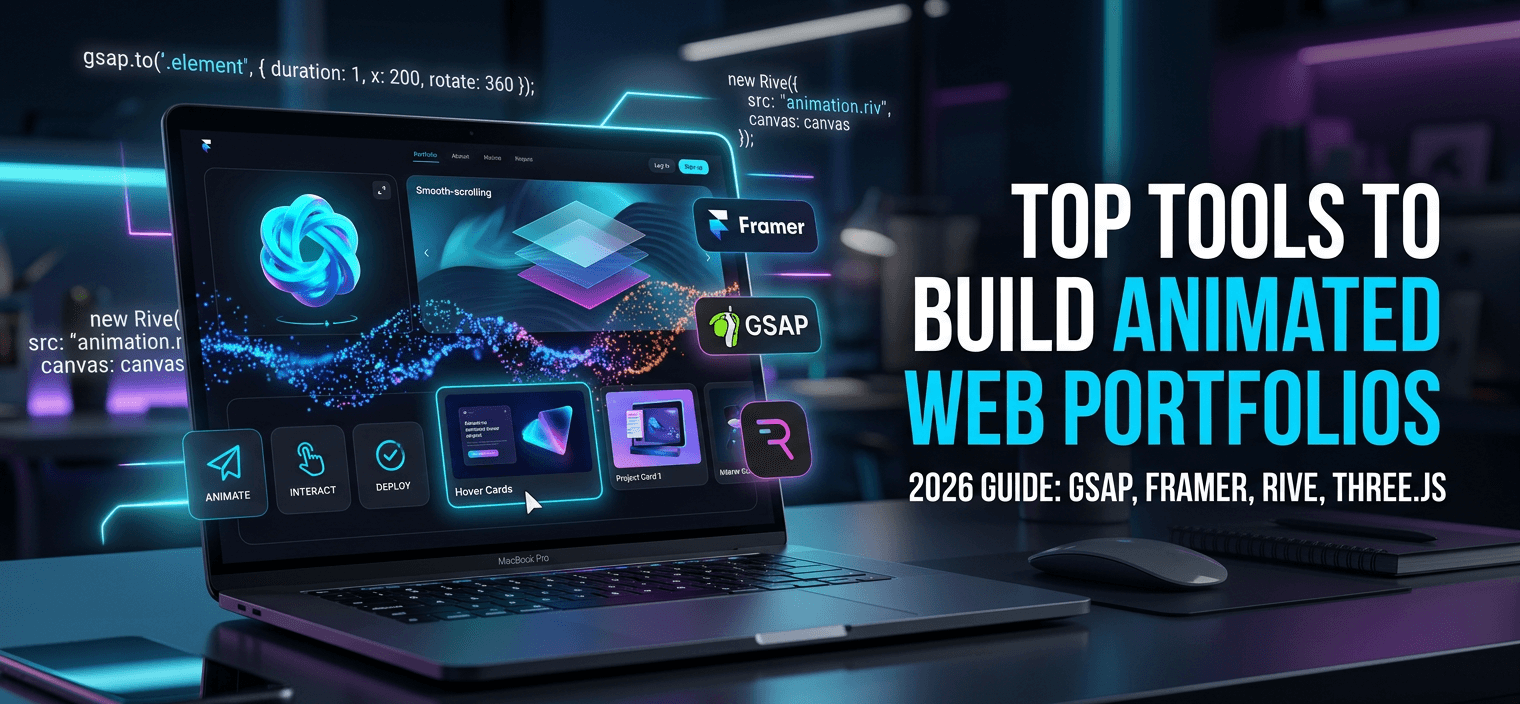
Motion That Converts: Top Tools to Build Animated Web Portfolios in 2026

Why Animation is the New Standard

In 2026, the first five seconds a visitor spends on your portfolio determine your brand’s perceived value. A static site says “functional,” but a fluid, animated experience says “premium.” With the arrival of high-speed Edge Computing and WebAssembly, complex animations no longer kill your page load speeds.

Today, the goal isn’t just to make things move—it’s to use Intentional Motion to guide the user’s eye toward your best work. If you are building a portfolio this year, these are the five power tools you need in your stack.

1. Rive: The Game-Changer for Interactive Vector

Rive has officially surpassed traditional video and GIF exports in 2026. It allows developers to create functional, state-machine-driven animations that respond to user input (like mouse hovers or clicks) with tiny file sizes.

  • The Evolution: Unlike a video, a Rive animation is a “living” file. You can change its state via code without re-rendering. It uses a custom renderer that bypasses the heavy DOM, running directly on the GPU.
  • Why it matters: It provides game-like interactivity while maintaining a “Perfect 100” Google Lighthouse score.

Tip from Zeroradius:

Use Rive for your Call-to-Action (CTA) buttons. An animated button that subtly reacts to the user’s cursor “searching” for it can increase click-through rates by up to 15%.

2. GSAP (GreenSock Animation Platform) 4.0

GSAP remains the undisputed king of web animation engines. In 2026, GSAP 4.0 has introduced deep integration with Web Components and ScrollTrigger, making complex scroll-based storytelling easier than ever.

  • The Evolution: Its “Flip” plugin allows for seamless layout transitions—like a small thumbnail smoothly expanding into a full-page hero image—without the “jank” associated with traditional CSS height/width changes.
  • Why it matters: It handles the “heavy lifting” of browser compatibility, ensuring your animations look identical on a Safari iPhone and a Chrome Desktop.

Tip from Zeroradius:

Don’t animate every element. Use GSAP specifically for “Scroll-Reveals.” By staggering the entrance of your portfolio items as the user scrolls, you create a narrative flow that prevents “information overload.”

3. Theatre.js: The Visual Motion Studio

For developers who prefer a visual timeline but want the power of code, Theatre.js is the go-to tool in 2026. It allows you to “direct” your website like a movie, creating cinematic sequences that interact with 3D elements (Three.js).

  • The Evolution: It provides a “studio” UI that floats on top of your live site, allowing you to tweak motion curves in real-time. Once you’re done, it exports a tiny JSON file of the animation data.
  • Why it matters: It’s perfect for “Hero Sections” where you want a high-impact, 3D entrance that wows high-ticket clients.

Tip from Zeroradius:

Use Theatre.js to animate 3D Project Mockups. Instead of a flat screenshot, show your work on a 3D laptop that rotates and opens as the user scrolls past.

4. Framer Motion (for React/Next.js)

If your portfolio is built on React or Next.js, Framer Motion is the industry standard. In 2026, it features “Layout Animations” that automatically animate elements as they move from one part of the page to another.

  • The Evolution: It uses a declarative syntax, meaning you describe what you want (e.g., “fade in”) rather than how to do it step-by-step. It now supports Shared Layout Transitions out of the box.
  • Why it matters: It makes “Page Transitions” (moving from the Home page to a Case Study) feel like a single, continuous experience.

Tip from Zeroradius:

Implement Shared Element Transitions. When a user clicks a project thumbnail, have that specific image “grow” to become the header of the next page. This keeps the user’s visual focus locked and reduces bounce rates.

5. Spline: 3D Animation for Everyone

3D is no longer “too heavy” for the web. Spline allows you to design 3D scenes, add interactivity, and export them as a simple web component or React hook.

  • The Evolution: It has a built-in physics engine. You can create a 3D background where objects bounce and collide based on the user’s mouse movements without writing a single line of complex GLSL code.
  • Why it matters: It adds a layer of “Playfulness” to your brand that flat design simply cannot match.

Tip from Zeroradius:

Keep 3D elements “Below the Fold” or use a “Loading Placeholder.” Even with modern speeds, a heavy 3D scene in the very first pixels of your site can hurt your LCP (Largest Contentful Paint). Optimize for speed first, then the “Wow” factor.

Strategy: The “Performance First” Animation Checklist

Animation can kill your SEO if not handled correctly. In 2026, Google prioritizes INP (Interaction to Next Paint). Use this checklist to stay safe:

  • Hardware Acceleration: Always animate transform and opacity. Avoid animating margin, width, or top, as these trigger expensive layout repaints.
  • Will-Change Property: Use the CSS will-change property on complex elements to tell the browser to prepare the GPU for motion.
  • Media Queries: Always wrap your heavy animations in a @media (prefers-reduced-motion: no-preference) block. This respects users with vestibular disorders and improves accessibility scores.
  • Lazy-Loading Assets: Don’t load your 3D Spline scenes or heavy Rive files until the user is within 500px of that section.

🤔 Frequently Asked Questions (FAQs)

Only if they are poorly implemented. If your animations are “Content-Heavy” and block the Googlebot from reading your text, yes. However, tools like GSAP use standard HTML/CSS, which is perfectly SEO-friendly.

Yes, but you should always follow the “Reduced Motion” media query. If a user has “Reduce Motion” turned on in their phone settings, your site should automatically simplify its animations to respect their preference.

The tools themselves are mostly free or low-cost for portfolios. The real “cost” is the time spent refining the curves. Start small—subtle motion is always better than chaotic motion.

Only if they are poorly implemented. If your animations are “Content-Heavy” and block the Googlebot from reading your text, yes. However, tools like GSAP use standard HTML/CSS, which is perfectly SEO-friendly.

Yes, but you should always follow the “Reduced Motion” media query. If a user has “Reduce Motion” turned on in their phone settings, your site should automatically simplify its animations to respect their preference.The tools themselves are mostly free or low-cost for portfolios. The real “cost” is the time spent refining the curves. Start small—subtle motion is always better than chaotic motion.

Motion is the Language of Trust

In 2026, your portfolio is your proof of concept. By using tools like Rive, GSAP, and Spline, you aren’t just showing your work—you are showing that you understand the modern user experience. Motion builds trust by making your digital space feel alive, responsive, and meticulously crafted.

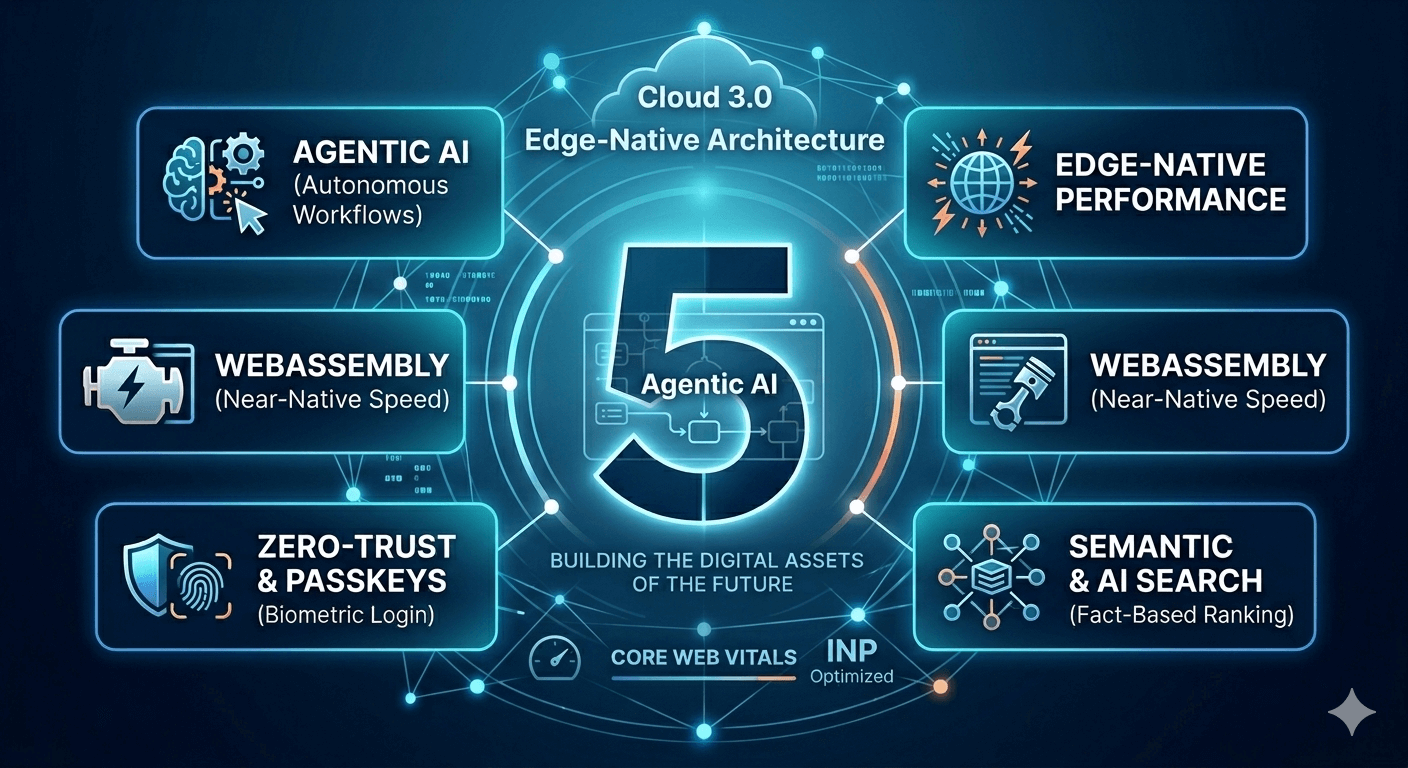
The 5 Tech Pillars Every Business Needs in 2026: A Strategic Guide

The Great Digital Reset of 2026

The digital landscape hasn’t just “evolved” in 2026; it has been entirely rewritten. We have officially moved past the era of static websites and basic SEO. Today, your digital presence is judged by two uncompromising critics: Artificial Intelligence and The 0.5-Second User.

If your website still relies on 2023 architecture, you aren’t just falling behind your competitors—you’re becoming invisible to search engines. Google’s latest updates now prioritize “Utility” and “Instantaneous Response” over everything else. To rank, you must provide a near-native experience that feels less like a website and more like a high-speed application.

1. Agentic AI (Autonomous Operators)

In 2026, we have graduated from “Generative AI” (which just writes text) to “Agentic AI” (which performs work). An AI Agent is a goal-oriented system integrated into your website that can use tools, access your database, and make decisions within a set of guardrails.

  • The Workflow: Unlike a standard chatbot that says, “Please call our support line,” an Agentic system can verify a user’s identity via Passkey, check their order history, interact with a shipping API to track a lost package, and issue a partial refund—all in one session.
  • Business Impact: This technology transforms your website from a passive information source into an active employee. It reduces the “friction to purchase” by solving customer problems in real-time without human intervention.

Tip from Zeroradius:

Before deploying agents, focus on Data Cleanliness. Agents rely on precise Schema Markup and structured API endpoints. If your internal data architecture is disorganized, the AI will provide halluncinated or incorrect actions.

2. Edge-Native Performance & “Cloud 3.0”

The traditional cloud model—where a user in Dubai waits for a server in Virginia to respond—is dead. Edge-Native architecture means your website’s code, logic, and even parts of its database live on hundreds of small “nodes” globally.

  • The Tech: We utilize Edge Functions (like Vercel Edge or Cloudflare Workers) to execute code milliseconds away from the user. This enables “Instant Rendering,” where the page is fully interactive before the user even finishes their click.
  • Why it Matters: Google’s 2026 search algorithm focuses heavily on INP (Interaction to Next Paint). If your site feels sluggish because it’s waiting for a distant server, your rankings will plummet regardless of your content quality.

Tip from Zeroradius:

Implement Edge Personalization. Instead of using heavy client-side tracking scripts that slow down the browser, use Edge logic to swap content and calls-to-action instantly based on the user’s geolocation and headers.

3. WebAssembly (Wasm) for Native-Level Power

For decades, the web was limited by the speed of JavaScript. WebAssembly (Wasm) is a binary instruction format that allows us to run heavy, high-performance languages like Rust, C++, and Go directly in the browser.

  • The Evolution: This allows websites to handle massive computational tasks—like 4K video editing, complex financial modeling, or real-time 3D rendering—at speeds previously only possible with downloaded software.
  • The SEO Angle: High-performance tools built with Wasm create incredible “User Dwell Time.” When users spend 10+ minutes interacting with a high-speed tool on your site, Google interprets your domain as a high-value authority.

Tip from Zeroradius:

For high-conversion eCommerce, use Wasm to power 3D Product Configurators. This allows customers to customize products in high-definition 3D with zero lag, which typically increases “Add-to-Cart” rates by over 30%.

4. Zero-Trust Security & Passwordless Auth

In 2026, AI is being used by hackers to generate millions of “credential stuffing” attacks every hour. The response is Zero-Trust Security: a model where no one is trusted by default, and every single request to your server must be continuously verified.

  • Passkeys over Passwords: We are replacing traditional passwords with Passkeys (WebAuthn). These use device-level biometrics (FaceID/Fingerprint) to log users in. They cannot be phished, guessed, or stolen in a data breach.
  • Micro-Segmentation: We build websites where the “front door” and the “database” are strictly separated. Even if a hacker finds a vulnerability in a UI component, they are blocked from accessing sensitive customer data.

Tip from Zeroradius:

Switch to Passwordless Authentication immediately. By removing the “forgot password” barrier, most platforms see a direct recovery of up to 20% of abandoned checkouts caused by login friction.

5. Semantic SEO & AI-Readable Content

Google 2026 has moved away from matching “keywords” to matching “entities.” Their AI search engine, Gemini, looks for specific Nodes of Information to answer user queries directly in the search results.

  • Entity-Based Content: Your content must now be structured with JSON-LD Structured Data. This tells Google’s AI exactly what your product is, who your experts are, and what problems you solve.
  • The “Source” Factor: To rank, you must be the “Source of Truth.” This means writing deep, original research and data-driven insights that AI engines want to cite as their primary reference.

Tip from Zeroradius:

Don’t just write for humans; write for Large Language Models (LLMs). Use a clear, logical heading hierarchy and concise “answer blocks” to increase the probability of your site being the “Featured Source” in AI-generated summaries.

🤔 Frequently Asked Questions (FAQs)

Typically, a “Performance & AI Audit” takes 1 week. Full implementation of these 5 pillars takes 6 to 10 weeks depending on your current backend’s technical debt.

Surprisingly, no. Because Edge-Native architecture reduces the load on your central servers and utilizes more efficient “serverless” technology, many businesses actually see a decrease in their monthly hosting bills.

Yes. For WordPress, we often move to a “Headless” setup, keeping the CMS you like but replacing the slow frontend with an Edge-Native React app. For Shopify, we use Hydrogen to achieve similar performance gains.

Typically, a “Performance & AI Audit” takes 1 week. Full implementation of these 5 pillars takes 6 to 10 weeks depending on your current backend’s technical debt.Surprisingly, no. Because Edge-Native architecture reduces the load on your central servers and utilizes more efficient “serverless” technology, many businesses actually see a decrease in their monthly hosting bills.Yes. For WordPress, we often move to a “Headless” setup, keeping the CMS you like but replacing the slow frontend with an Edge-Native React app. For Shopify, we use Hydrogen to achieve similar performance gains.

Building for the Next Decade

In 2026, technology is no longer a “support” function for your business—it is the business. The gap between companies using legacy systems and those utilizing Agentic AI, Edge-Native performance, and Zero-Trust security is widening every day. A website that is slow, insecure, or “AI-blind” is a liability that costs you revenue every hour it stays online.

At Zeroradius, we don’t just build websites; we build digital assets designed to withstand the rapid shifts of the AI era.

Don’t let your digital presence get stuck in the past.

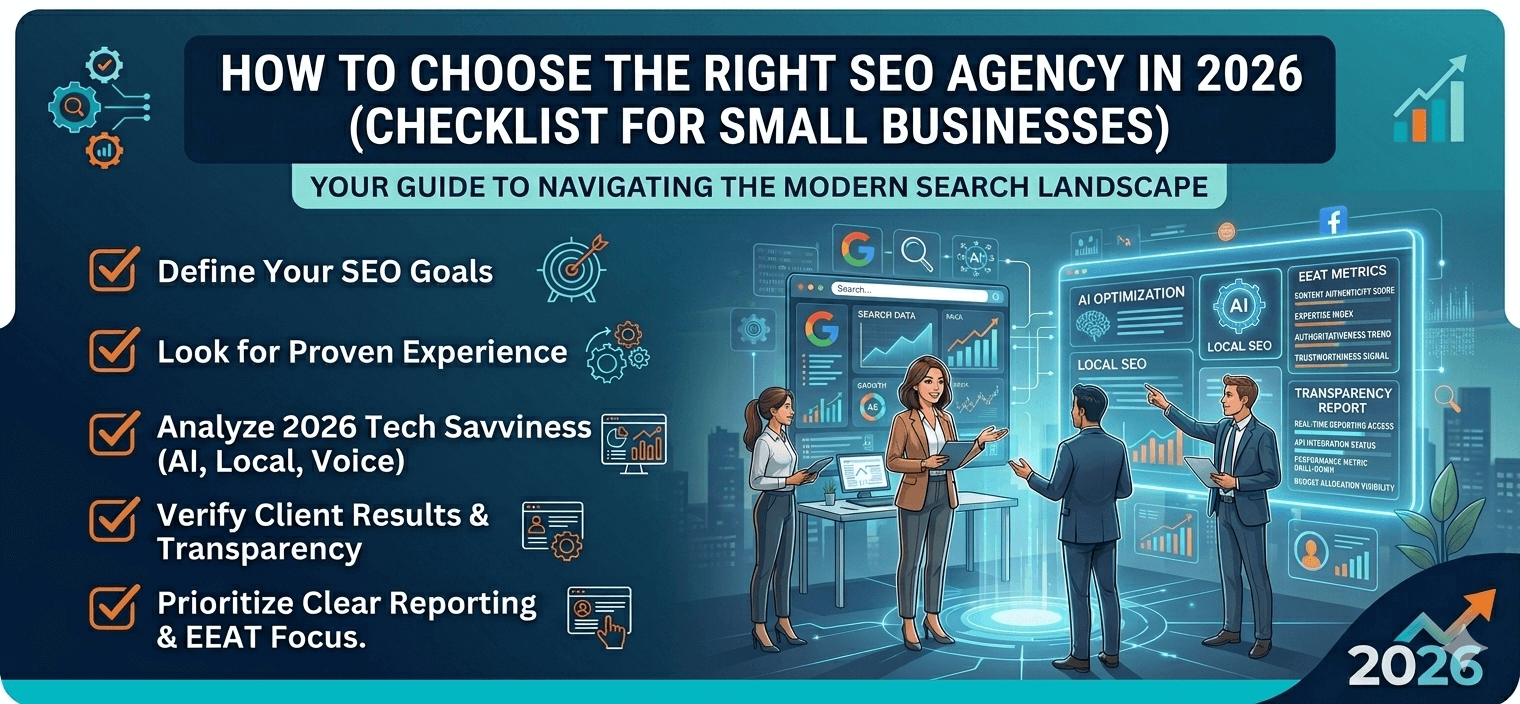
How to Choose the Right SEO Agency in 2026 (Checklist for Small Businesses)

Choosing the right SEO agency in 2026 is not just a marketing decision — it’s a growth decision.

With AI-powered search, evolving Google algorithms, and increasing online competition, small businesses can no longer rely on outdated SEO tactics. You need a strategic partner who understands modern search behavior, conversion optimization, and long-term digital growth.

This comprehensive guide will help you evaluate, compare, and confidently hire the right SEO agency using a practical checklist designed specifically for small businesses.

Why Choosing the Right SEO Agency Matters More Than Ever

Search engines in 2026 prioritize:

  • User intent over keyword stuffing
  • Content depth over thin pages
  • Brand authority over random backlinks
  • Experience signals (E-E-A-T)
  • Performance and mobile-first optimization

Hiring the wrong agency can result in:

  • Wasted marketing budget
  • Poor-quality backlinks
  • Google penalties
  • Declining rankings
  • Missed growth opportunities

The right SEO partner, however, becomes a long-term asset that compounds traffic and revenue over time.

2026 Checklist: How to Evaluate an SEO Agency

1. Do They Show Real, Verifiable Case Studies?

Any serious SEO agency should provide detailed case studies — not vague claims.

Ask for:

  1. Before-and-after traffic data
  2. Keyword ranking improvements
  3. Conversion or revenue growth metrics
  4. Timeline of results

A strong case study should explain:

  • The challenge
  • The strategy implemented
  • The measurable results

If they hesitate to share data or provide generic screenshots without explanation, consider that a warning sign.

Tip from Zeroradius:

Always ask for case studies from businesses similar to yours. Industry-specific experience often reduces testing time and delivers faster ROI.

2. Do They Provide a Clear, Customized SEO Strategy?

Avoid agencies that offer “one-size-fits-all” packages.

A professional SEO agency should first:

  1. Conduct a technical audit
  2. Analyze competitors
  3. Perform keyword research
  4. Identify content gaps
  5. Review your current authority level

Then they should present:

  • A technical SEO roadmap
  • Content creation plan
  • Link-building strategy
  • Estimated timeline

If the agency jumps straight to pricing without strategy discussion, they are not focused on results.

Tip from Zeroradius:

Before signing any contract, request a high-level 90-day action plan. A confident agency can clearly outline what will be done in the first 3 months.

3. Do They Focus on Business Growth, Not Just Rankings?

Ranking #1 for a keyword means nothing if it doesn’t convert.

Ask these questions:

  1. How will you improve conversion rate?
  2. Will you optimize landing pages?
  3. Do you track leads and sales?
  4. What KPIs define success?

Modern SEO is deeply connected with:

  • UX design
  • Sales funnel optimization
  • Conversion rate optimization (CRO)
  • Analytics tracking

The right agency thinks like a growth partner — not just a ranking service.

Tip from Zeroradius:

The best SEO strategies align keyword targeting with buyer intent. Ranking for “buy” keywords typically delivers stronger revenue impact than informational keywords alone.

4. Are They Transparent About Pricing and Deliverables?

SEO pricing varies based on competition, industry, and goals.

In 2026, small businesses typically invest:

$800 – $3,500 per month for professional SEO

But more important than price is clarity.

You should know:

  1. What services are included
  2. How many content pieces per month
  3. How many backlinks
  4. What technical improvements
  5. Reporting frequency

Avoid agencies that:

  • Hide deliverables
  • Offer extremely cheap packages
  • Promise unrealistic results

Quality SEO requires consistent effort and expertise.

Tip from Zeroradius:

Avoid comparing agencies based purely on price. Compare them based on deliverables, expertise, and projected ROI potential.

5. Do They Follow Ethical (White-Hat) SEO Practices?

Google’s algorithms are more advanced than ever.

Ask:

  1. How do you build backlinks?
  2. Do you buy links?
  3. Do you follow Google guidelines?

Avoid agencies that:

  • Use link farms
  • Use automated backlink tools
  • Stuff keywords unnaturally
  • Copy competitor content

Shortcuts may produce temporary results — but long-term damage can be severe.

Ethical SEO focuses on:

  • High-quality content
  • Strategic outreach
  • Digital PR
  • Technical optimization
  • Strong internal linking

Tip from Zeroradius:

Ask how backlinks are earned. If the answer involves outreach, digital PR, partnerships, and quality content — you’re on the right track.

6. Do They Understand AI-Driven Search in 2026?

Search has evolved significantly.

Modern SEO must consider:

  1. AI-generated search summaries
  2. Featured snippets
  3. Voice search optimization
  4. Semantic keyword clusters
  5. Topic authority models

Ask:

  • How do you optimize for AI search results?
  • Do you structure content for rich results?
  • How do you build topical authority?

If they only talk about “exact keywords” and “meta tags,” they may be behind current standards.

Tip from Zeroradius:

Ask if they structure content for featured snippets and AI summaries. Proper heading hierarchy and concise answer blocks significantly increase visibility.

7. Do They Provide Detailed Monthly Reporting?

Transparency builds trust.

Your monthly report should include:

  1. Keyword ranking updates
  2. Organic traffic trends
  3. Conversion tracking
  4. Technical improvements made
  5. Backlinks acquired
  6. Content published

More importantly, the report should explain:

  • What worked
  • What didn’t
  • What’s next

SEO is an evolving process, not a static service.

Tip from Zeroradius:

Look for agencies that explain data in simple business language, not just technical metrics. Clarity reflects expertise.

Red Flags to Avoid When Hiring an SEO Agency

Be cautious if you notice:

  • Guaranteed #1 rankings
  • Extremely low pricing
  • No clear strategy explanation
  • Long-term contracts with no flexibility
  • Poor communication
  • No clear reporting

Remember: SEO is a partnership. You should feel informed and confident — not confused.

SEO Agency vs Freelancer: Which Should You Choose?

Both have advantages.

SEO Agency Advantages:

  • Team of specialists (technical, content, analytics)
  • Structured workflow
  • Greater scalability
  • Broader expertise

Freelancer Advantages:

  • Lower cost
  • Direct communication
  • Flexible engagement

If you’re aiming for aggressive growth, an agency often provides more comprehensive support. For small, local projects, a skilled freelancer may be sufficient.

Tip from Zeroradius:

If your website generates consistent revenue or high-value leads, investing in a structured agency team often delivers stronger long-term growth.

How Long Does SEO Take to Deliver Results?

SEO is a long-term strategy.

Typical timeline:

1–2 months: Technical fixes & planning

3–4 months: Early ranking improvements

6–8 months: Strong traffic growth

9–12 months: Authority and competitive rankings

Industries with high competition may take longer.

Patience and consistency are critical for sustainable success.

Tip from Zeroradius:

Sustainable SEO growth is cumulative. Agencies that promise instant rankings often rely on risky tactics that can hurt your domain authority.

Choose a Growth Partner, Not Just a Service Provider

Choosing the right SEO agency in 2026 requires careful evaluation.

  1. Don’t focus only on price
  2. Don’t chase quick wins.
  3. Don’t believe ranking guarantees.

Instead, look for:

  • Strategic thinking
  • Transparency
  • Ethical practices
  • Measurable results
  • Long-term partnership mindset

The right SEO agency doesn’t just increase traffic — they help build digital authority and sustainable revenue growth.

Tip from Zeroradius:

Treat SEO as an investment, not an expense. The right agency becomes a strategic partner in scaling your digital presence.

🤔 Frequently Asked Questions (FAQs)

Check reviews, request case studies, ask about their strategy, and ensure they follow ethical SEO practices aligned with Google guidelines.

Most small businesses invest between $800 and $3,500 per month depending on competition and scope of services.

No ethical agency can guarantee rankings. Search results depend on competition, algorithm updates, and strategy execution.

Yes. With increasing digital competition, SEO remains one of the highest ROI marketing channels for long-term organic growth.

Check reviews, request case studies, ask about their strategy, and ensure they follow ethical SEO practices aligned with Google guidelines.Most small businesses invest between $800 and $3,500 per month depending on competition and scope of services.No ethical agency can guarantee rankings. Search results depend on competition, algorithm updates, and strategy execution.Yes. With increasing digital competition, SEO remains one of the highest ROI marketing channels for long-term organic growth.

How to Build an AI Chatbot for Your E-commerce Website in 2026 (Complete Guide)

AI chatbots are transforming eCommerce in 2026. From automated customer support to AI-powered product recommendations, modern online stores are using AI chatbot for ecommerce solutions to increase conversions and reduce support costs.

If you run a Shopify or WooCommerce store — especially in competitive markets like Dubai — this guide will show you exactly how to build an AI chatbot for your eCommerce website.

What Is an AI Chatbot for eCommerce?

An AI chatbot for eCommerce is a conversational tool powered by artificial intelligence that interacts with customers in real time.

Unlike traditional rule-based bots, AI chatbots use:

  • Natural Language Processing (NLP)
  • Machine learning
  • Customer behavior data
  • Real-time product integration

They can:

  • Answer product queries
  • Recommend products
  • Track orders
  • Handle refunds
  • Recover abandoned carts


Tip from Zeroradius:

Start with high-volume customer questions from your support inbox. Training your chatbot with real queries improves accuracy and reduces frustration.

Why AI Chatbots Are Essential for Online Stores in 2026

Customer expectations have changed. Shoppers want:

  • Instant replies
  • Personalized recommendations
  • 24/7 availability
  • Fast checkout assistance

For Dubai-based eCommerce businesses, AI automation provides a competitive edge in a fast-growing digital economy.

Benefits of AI Chatbots for eCommerce

  • Reduce customer support costs
  • Increase conversion rates
  • Improve user experience
  • Automate sales processes
  • Boost average order value


Tip from Zeroradius:

Integrate chatbot personalization using customer purchase history to increase upselling and cross-selling opportunities.

Step-by-Step: How to Build an AI Chatbot for Your eCommerce Website

Define Your Chatbot Goals

Decide what you want your chatbot to do:

  • Customer support automation
  • AI product recommendations
  • Order tracking
  • Cart abandonment recovery
  • Lead generation

Clear goals reduce development complexity.


Tip from Zeroradius:

Don’t try to build a “super bot” initially. Launch with 2–3 strong features and scale based on user behavior data.

Choose the Right AI Chatbot Platform

Popular AI chatbot development tools in 2026 include:

  • OpenAI API integration
  • Google Dialogflow
  • Shopify AI apps
  • Custom-built AI chatbot systems

For Shopify stores in Dubai, native Shopify AI apps allow faster deployment.


Tip from Zeroradius:

If targeting UAE customers, choose tools that support Arabic + English conversational models.

Integrate the Chatbot with Your eCommerce Backend

Your chatbot must connect with:

  • Product database
  • Inventory system
  • Payment gateway
  • CRM software
  • Order management system

For WooCommerce:
Use REST API integration.

For Shopify:
Use custom apps or middleware connectors.


Tip from Zeroradius:

Ensure real-time inventory syncing to avoid recommending out-of-stock products.

Train Your AI Chatbot with Customer Data

The effectiveness of your AI chatbot depends on training quality.

Use:

  • Past support chats
  • FAQs
  • Product descriptions
  • Customer buying patterns

Add local buying phrases such as:

“Cash on delivery in Dubai”
“Best price in UAE”


Tip from Zeroradius:

Continuously update your chatbot training monthly based on new customer questions.

Optimize the Chatbot for Sales Conversion

An AI chatbot should not only answer questions — it should sell.

Add:

  • Smart product recommendations
  • Discount triggers
  • Exit-intent automation
  • Cart recovery reminders
  • This increases revenue automatically.


Tip from Zeroradius:

Use AI-driven product recommendation algorithms instead of manual suggestions for higher accuracy.

Ensure Security & Data Protection

Security is critical in AI chatbot development.

Implement:

  • SSL encryption
  • Secure API authentication
  • GDPR & UAE data compliance
  • Encrypted payment handling


Tip from Zeroradius:

Avoid storing payment details directly in chatbot conversations. Redirect sensitive transactions to secure checkout pages.

How Much Does AI Chatbot Development Cost in 2026?

AI chatbot development cost depends on complexity:

  • Basic chatbot integration: $1,500 – $4,000
  • Advanced AI sales chatbot: $6,000 – $15,000+
  • Custom enterprise solution: $20,000+

Costs vary based on:

  • Custom AI model training
  • Shopify/WooCommerce integration
  • Multilingual capability
  • Ongoing maintenance

Future of AI Chatbots in Dubai eCommerce

Dubai is rapidly adopting AI-powered business solutions. Government initiatives and smart city strategies are accelerating AI integration in online businesses.

In the next few years, AI chatbots will:

  • Offer voice-enabled chat
  • Provide predictive shopping experiences
  • Automate entire checkout flows
  • Integrate with WhatsApp & social commerce

Businesses implementing AI chatbot development in 2026 will gain early-mover advantage.

🤔 Frequently Asked Questions (FAQs)

The best AI chatbot depends on your platform. Shopify stores benefit from native AI apps, while custom stores may require OpenAI or Dialogflow integration for advanced automation.

Yes. AI chatbots improve conversions by offering instant assistance, personalized product recommendations, and automated cart recovery.

Yes. Many AI chatbot tools offer scalable pricing, allowing small businesses to start with basic automation and upgrade as they grow.

Basic integration can take 2–4 weeks, while advanced custom chatbot development may take 1–2 months depending on complexity.

The best AI chatbot depends on your platform. Shopify stores benefit from native AI apps, while custom stores may require OpenAI or Dialogflow integration for advanced automation.

Yes. AI chatbots improve conversions by offering instant assistance, personalized product recommendations, and automated cart recovery.

Yes. Many AI chatbot tools offer scalable pricing, allowing small businesses to start with basic automation and upgrade as they grow.Basic integration can take 2–4 weeks, while advanced custom chatbot development may take 1–2 months depending on complexity.

Final Takeaway

AI chatbots are no longer optional in modern eCommerce. In 2026, they are essential tools for improving customer experience, boosting sales, and automating operations.

If your goal is to scale your online store in Dubai or the UAE, implementing an AI chatbot for eCommerce should be a priority in your digital strategy.